I Made It to Day Nine Before a Ball of Wool Undid My Craft Supply Freeze
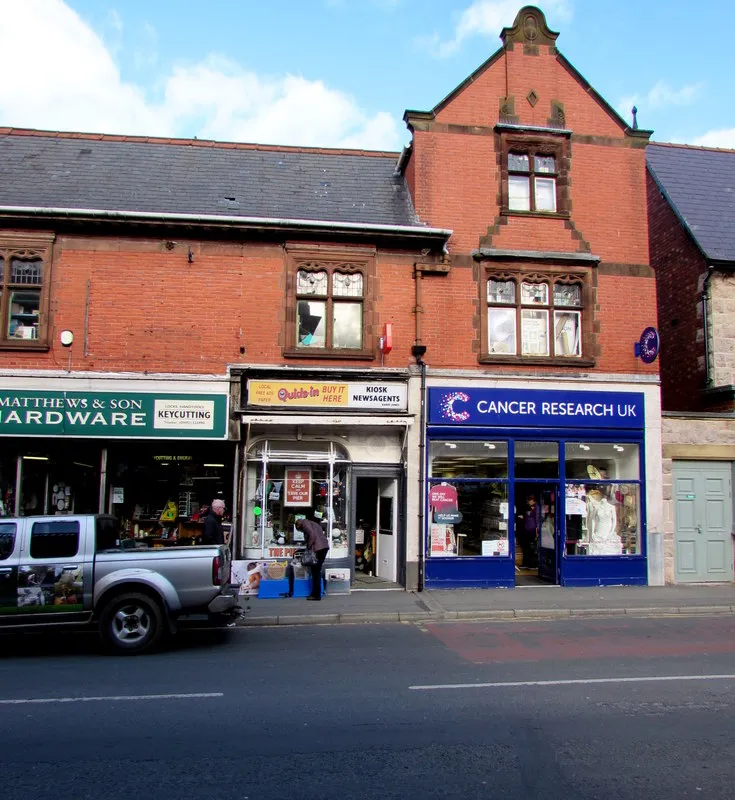
Photo: Jaggery , CC BY-SA 2.0, via Wikimedia Commons
I am not, by nature, a person who denies herself things. I am the sort of person who goes into Hobbycraft for a glue stick and comes out with a glue gun, a set of wooden shapes and a vague plan to make a wreath. So when I announced, in the middle of a perfectly ordinary Tuesday, that I was going to spend November buying no new craft supplies, my own face looked back at me from the mirror with real suspicion.
This wasn't a money-saving masterplan, although my bank statement would probably welcome one. It was more of an experiment. I wanted to know what would happen if I couldn't solve every creative wobble by buying something small and shiny. Could I make things with what I already had? Or would I simply spend four weeks rearranging the same three bags of pom-poms and calling it a practice?
The rules, such as they were
I gave myself one month, starting on 1 November. No new wool, no new fabric, no novelty buttons shaped like woodland creatures. No packets of embroidery floss in colours I definitely already own but cannot find because they are in a different tin. No popping into The Range "just to look". No browsing charity shops for craft bargains and pretending that second-hand shopping doesn't count. It absolutely counts. That was the whole point.
The only exception was actual essentials: replacement blades, maybe a bottle of glue if I genuinely ran out. I quickly realised this was a dangerous loophole. "Essential" is a word I can stretch until it snaps. A glue gun is essential. A second glue gun is essential if the first one is upstairs. A bag of sparkly felt is essential if the project is, in some broad sense, festive.
I wrote the rules on a Post-it and stuck it to the cupboard door. Then I opened the cupboard and remembered why I needed the experiment in the first place.
What was actually in the cupboard
I have a lot of craft supplies. Not in a beautiful, colour-coordinated studio way. More in a "this drawer has become a geological layer" way. I found half-used skeins of wool, three glue guns, a bag of felt offcuts, ribbons kept from Christmas presents, a box of buttons, some fabric I bought for a project I no longer remember, and a small wooden heart with the word "Home" on it that I have definitely owned since before the pandemic.
It was slightly embarrassing. It was also, once I got over myself, quite freeing. I sat on the floor and made a pile of things I could use: wool for a pair of fingerless gloves, fabric for a patchwork pouch, felt for something small and silly. I didn't need to go shopping. I needed to look properly at what was already there.
For the first week, it was easy. Almost suspiciously easy. I made a very rustic lavender bag that leaned heavily on the word "rustic". I mended a cushion cover that had been waiting since roughly the Stone Age. I used up a tiny ball of leftover cotton on a coaster that is now slightly too small for any mug I own. None of it was impressive. All of it was satisfying.
The charity-shop wool problem
What I hadn't accounted for was how often craft shopping happens by accident. I popped into a charity shop on day four for a paperback and walked past a basket of wool. I didn't buy any. I want that on the record. I looked at it, had a small internal conversation that went, "You don't need it, you have wool at home, you are a grown woman," and left with only the book. I felt unbearably smug for about six hours.
By day eight, the smugness had worn off and the itch had started. Not for anything specific. Just the itch. I wanted the little hit of possibility that comes with a new packet of something. A fresh skein. A new colour. The idea that this time, the project might turn out exactly as it looks in my head. That is the thing about buying craft supplies: you are not really buying wool. You are buying a version of yourself who finishes things neatly and owns a label maker.
I kept the Post-it on the cupboard door. I made a list of projects using only what I had. I told myself this was character-building. It was, a bit. It was also mildly annoying.
Day nine
Day nine was a Saturday. I went into town for a coffee and a browse, which is already a risky combination. I ended up in a charity shop that smells faintly of furniture polish and old books. I was doing so well. I was halfway to the door when I saw it: a bag of chunky wool in a soft grey-green, the exact colour I'd been imagining for a hat. It was £3.50. It had a handwritten label. It was, and I say this with the gravity it deserves, an absolute bargain.
I bought it.
The rules said no new craft supplies. The rules did not say anything about second-hand wool that was clearly fate. Except they did, because I had already decided that charity shops counted. I knew I was breaking my own rule while I was breaking it, which is somehow worse than a clean, honest slip.
I got home, put the wool on the table and felt a bit daft. Not guilty, exactly. Just daft. The experiment wasn't ruined, but it had been dented. I had made it to day nine. Nine days of using what I had, and then a £3.50 bag of wool undid me.
So I did the only sensible thing: I admitted it, made a cup of tea, and used the wool. I crocheted a hat. It is slightly too big and the brim is uneven, but I wear it. It reminds me that the point was never to be perfect. The point was to notice how often I use buying as a substitute for starting.
What I'm keeping from the experiment
The no-spend month didn't survive intact, but something useful came out of it. I am now much quicker to check the cupboard before I check a website. I have a box labelled "things to use first", which is basically a fancy way of saying "the craft supplies I forgot I owned". I have stopped treating a new purchase as the necessary beginning of every project. Sometimes the beginning is just clearing a space on the table and seeing what's already there.
Would I do it again? Yes, probably in January, when the house is full of leftover cheese and good intentions. Would I make it past day nine? I'd like to think so. But I'm not making any promises. I know what I'm like in a charity shop, and I know what I'm like when a bag of grey-green wool is looking at me with its little handwritten label.
Some experiments teach you discipline. Mine taught me that I am a work in progress, and that a slightly wonky hat is still a hat.