Twenty Quid, Four Charity Shops, One Very Questionable Blazer
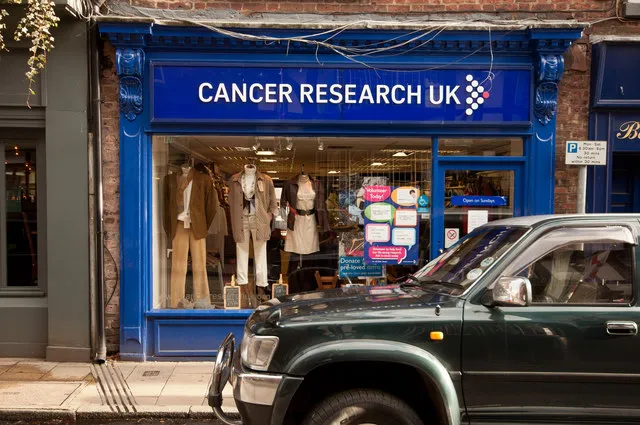
Photo: Roger A Smith , CC BY-SA 2.0, via Wikimedia Commons
I have a bad habit in charity shops. I go in for a browse and come out with a mug, a paperback I will not read and a jumper that fits in the shop but appears to have been designed for a different human by the time I get home. So I set myself a challenge: £20, four charity shops, one full outfit. Everything second-hand. No sneaky Primark vest underneath. Alterations allowed, but only with thread and buttons I already owned.
The rules were simple. The outfit had to be wearable, not fancy dress. Shoes and accessories counted. I could not spend more than £20 in total. I had one Saturday, which in November means limited daylight and a strong urge to be back on the sofa by 4pm.
The shops, the plan and the reality
I went to four local shops: an Oxfam, a British Heart Foundation, a Scope and a small hospice shop. I took a list. A shirt, trousers or a skirt, something warm, shoes and a belt if I could manage it. I also took a tape measure, because charity shop sizing is a work of fiction and I have been burned before.
The reality of charity shopping is less 'curated vintage boutique' and more 'rail of clothes that smell faintly of someone else's wardrobe'. That is the point. Some shops are treasure chests. Some are racks of faded fast fashion that has already had one life and is not keen on a second. You have to be willing to leave empty-handed. That is the bit I find hardest.
Shop one: the optimistic start
Oxfam was busy in the way that charity shops are busy on a Saturday: one person at the till, three people browsing, and a volunteer trying to find a lid for a Tupperware box. I found a red Christmas jumper with a dog in a Santa hat for £4. It was joyfully awful. I wanted it. I put it back. I was there for a whole outfit, not a comedy jumper.
Then I found a blue-and-white striped cotton shirt for £3.50. Good collar. Slightly big, which I prefer. No missing buttons. I bought it. That was £3.50 gone and £16.50 left.
Shop two: the blazer incident
The British Heart Foundation had a rail of blazers, which is either a gift or a warning. I found a 1980s navy blazer for £6. It had proper shoulders, a slightly shiny lining and buttons that looked like they had seen a few office parties. I tried it on. I looked like a junior estate agent in a regional production of Dynasty. I bought it anyway.
Why? The fabric was good. The buttons were nice. I could take in the waist, roll the sleeves, make it feel deliberate rather than borrowed. Also, it was £6, and I am only human.
I nearly bought a brown leather jacket for £18. It smelled of damp and ambition. It would have used almost my whole budget and left me with a shirt, a jacket and no trousers. I walked away. I regretted it for about four minutes, then remembered the damp.
Shop three: the odd gem
Scope was the quietest shop and the best for browsing. I found a pair of grey wool trousers for £4. They were a little big in the waist, but wool is forgiving and a belt would help. Then, on a hook near the till, I found a silk scarf for £2.50. It was peacock blue with a label from a department store that no longer exists. I do not usually wear scarves. I bought it because the colour made me feel like a person who has her life together.
That was the odd gem. Not the blazer. Not the trousers. The scarf. It was the thing I would never have picked up in a fast-fashion shop because it would have been sold as part of a trend. Here it was just a nice thing someone had finished with.
Shop four: the final push
In the hospice shop I found a brown leather belt for £2 and a pair of black loafers for £2. The shoes were scuffed and slightly too big, but a pair of insoles from home sorted that. I am counting the insoles as a household item, not part of the £20. I am aware that is a grey area.
Total: £3.50 shirt, £6 blazer, £4 trousers, £2.50 scarf, £2 belt, £2 shoes. Exactly £20. I did not plan it that neatly. I was as surprised as anyone.
The alterations
At home I took up the trousers by hand, which took one evening and a lot of squinting. I took in the blazer waist a little and swapped the buttons for some dark wooden ones from my sewing tin. I pressed everything. The blazer still had broad shoulders. I decided to lean into it rather than fight it. Belted, it looked intentional. Unbelted, it looked like I was about to present a local news segment.
The final look
The outfit was a striped shirt, grey wool trousers, the navy blazer, the peacock scarf and the loafers. I looked like someone who works in publishing and owns several plants. I liked it. It was not fashionable in a loud way. It was just mine.
I wore it to a friend's birthday drinks and got two compliments, one of which was 'you look like you have a good library card'. I have chosen to take that as a win.
What I nearly bought and what I regretted
I nearly bought the Christmas jumper, a fringed suede waistcoat and a mug that said 'World's Best Grandma'. I regret none of those decisions. I do regret not buying a moss-green wool skirt in Scope. It was £5, it did not fit, and I told myself I could alter it. I probably could not have. It still haunts me.
I also regret the shoes slightly. They pinched on the walk home. But for £2, I can forgive a lot.
What it taught me about my taste
I learned that I like texture more than logos. I like colour in small doses, usually at the neck or the wrist. I like clothes that feel like they have been worn by someone with a life. Fast fashion gives you an instant outfit and a hundred options that all look the same. Charity shops force you to edit. You have to know what you actually like, because there is no mannequin telling you what to buy.
It also taught me that not every charity shop is a treasure chest. Some are hard work. Some smell like damp. Some have a rail of clothes that should probably go in the textile bank. That is fine. The point is the hunt, not the guarantee.
The stories clothes carry
The blazer had a dry-cleaning tag from a town I have never visited. The trousers had a name written in the waistband in fading biro. The scarf had a label from a shop that closed years ago. These are small things, but they remind you that clothes have lives before you. Wearing second-hand is not saintly. It is just a better use of what already exists. It is also more interesting.
Would I do it again? Yes. £20 is tight, and I would not pretend it is easy for everyone. But it is possible. Take a list, take a tape measure, try things on, check the pockets, and do not buy 'maybe'. Buy the thing you would wear tomorrow. And if you see a peacock-blue silk scarf for £2.50, buy it. That is the rule I am sticking to.