The Half-Made Drawer: A November Sort-Out With No Guilt Attached

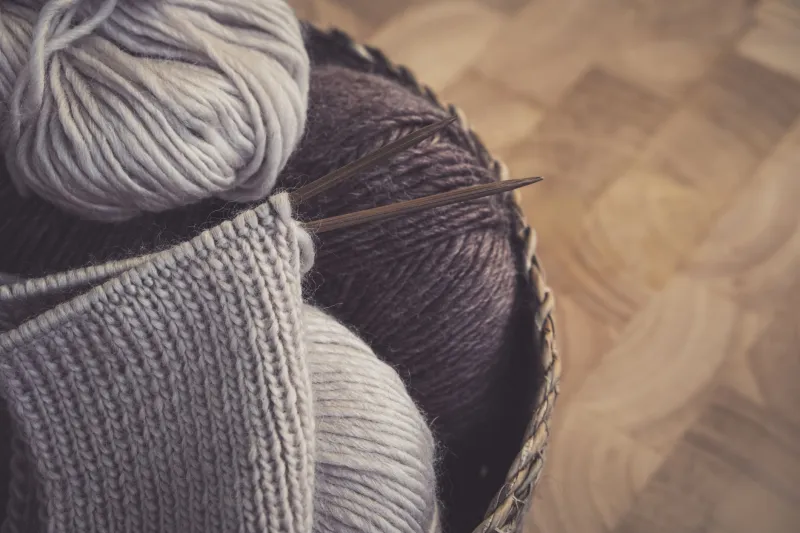
Photo by Photo by Marília Castelli on Unsplash on Unsplash
On 14 November 2026, the kitchen radio is doing its usual trick of fading out just as someone says something interesting, and I have finally opened The Drawer. Not the one with the takeaway menus and the spare batteries. The other one. The one that sticks a bit because it is full of good intentions.
This is the drawer where half-finished makes go to hide. You know the sort of thing: a hoop with three leaves left to sew, a cushion cover pinned within an inch of its life, wool for a hat that nobody actually asked for. Every November I open it and feel a small, sharp pang of failure. This year I decided to try a stocktake instead of a telling-off.
The drawer that sticks
Here is the honest inventory. A tea-towel embroidery of a robin, missing one wing. A cushion cover in a fabric I loved in 2023 and still like. Two balls of aran wool bought for a hat that was never requested by anyone, including me. A lino cut of a magpie with the beak not quite cut. A bookbinding experiment with warped boards. And a length of bias binding I cannot explain, even to myself.
None of it is rubbish. That is the problem. Rubbish is easy to bin. This is all potential, which is much harder to shift. Potential sits there quietly reminding you that you once had an idea and then, somewhere between a Tuesday evening and a busy spring, you stopped.
Why November turns a drawer into a verdict
There is something about the dark afternoons and the year-end lists that makes every unfinished thing feel like evidence against you. The internet is full of people finishing things. Craft accounts are posting their final makes of the year. Someone has probably already knitted a whole blanket since September and is now doing a tasteful flat-lay about it.
I have nothing against finishing things. Finishing is lovely. But I have started to think that the November pressure to wrap up the year neatly is a bit like trying to tidy a house before guests arrive: it makes you treat normal, ongoing life as a mess that needs apologising for. Creativity is not a tax return. It does not have to balance by 31 December.
Most makers I know have a drawer, a box, a bag or a cupboard shelf where the half-made things live. It is not a sign of failure. It is a sign of having more ideas than evenings. That is a fairly ordinary human condition.
The three-pile method
I cleared the kitchen table, made a cup of tea and put down three sheets of paper: Finish, Forgive and Rehome.
The rules were simple. Finish only if I actually wanted the finished object and could realistically do it in one or two evenings. Not because I should, not because it had been there the longest, and not because it would make a good photograph. Forgive if the project had taught me something, or if I was simply no longer interested. Forgiving meant no guilt and no dramatic binning ceremony, just a decision. Rehome if the materials would have a better life somewhere else.
The question I kept asking was this: if this vanished tomorrow, would I be relieved or sad? It is a surprisingly useful test. Several things I had been calling unfinished were really just things I did not want to make any more.
The cushion that very nearly won
The cushion cover had been pinned for eight months. Eight months. It took about twenty-five minutes of hand-sewing to close it up. I did it while half listening to the radio and trying not to think about how much easier it would have been if I had done it in the first place.
It is now on the sofa. It is slightly wonky at one corner. The fabric does not really match anything, but it matches the version of me who bought it, so that will do. The relief was not because the cushion is brilliant. It was because the loop was finally closed. That is the bit I forget when a project is sitting in the drawer: the weight of it is often much heavier than the actual job.
The things I let off the hook
The lino cut went into the Forgive pile. I like the idea of lino cutting more than I like the actual cutting. I like the tools, the ink, the idea of being a person who makes prints. I do not especially like the bit where my hand cramps and the beak goes wrong. That is allowed. I have kept the tools for now, but I am not pretending the magpie is a work in progress.
The bookbinding attempt was also forgiven. The boards warped because I was impatient and did not weight them properly. I learned that I need better glue and more patience, which is a useful lesson, even if it did not produce a notebook. Forgiving a project is not the same as wasting it. Sometimes the finished object was never the point.
The wool goes to a better home
The two balls of aran wool went to a neighbour who knits hats for the local baby bank. She was delighted. I was delighted. The hat that nobody asked for will not be made, and that is fine. Rehoming is not losing a project. It is letting someone else have the material and the possibility.
I also put the bias binding in a bag for the craft club noticeboard, because someone there will know what it is for. I still do not.
The one I am keeping unfinished on purpose
There is one thing I am not sorting. I have a patchwork quilt that has been on the go since 2019. I am no longer calling it unfinished. It is ongoing. It lives in a basket rather than the drawer because it has earned a different label. Some projects are not late; they are long. A quilt made over years is not a failure of scheduling. It is just a quilt that is taking its time.
A drawer is not a debt
The drawer is lighter now, but not empty. There is still a half-made felt robin in there, and I have decided that is fine. November is dark enough without turning a craft project into a character flaw. If you are opening your own drawer this week, go gently. Sort what you can, forgive what you cannot, and remember that the drawer is not a scoreboard. It is just a drawer.