My Studio Has a Bread Bin in It, and I've Made Peace With That
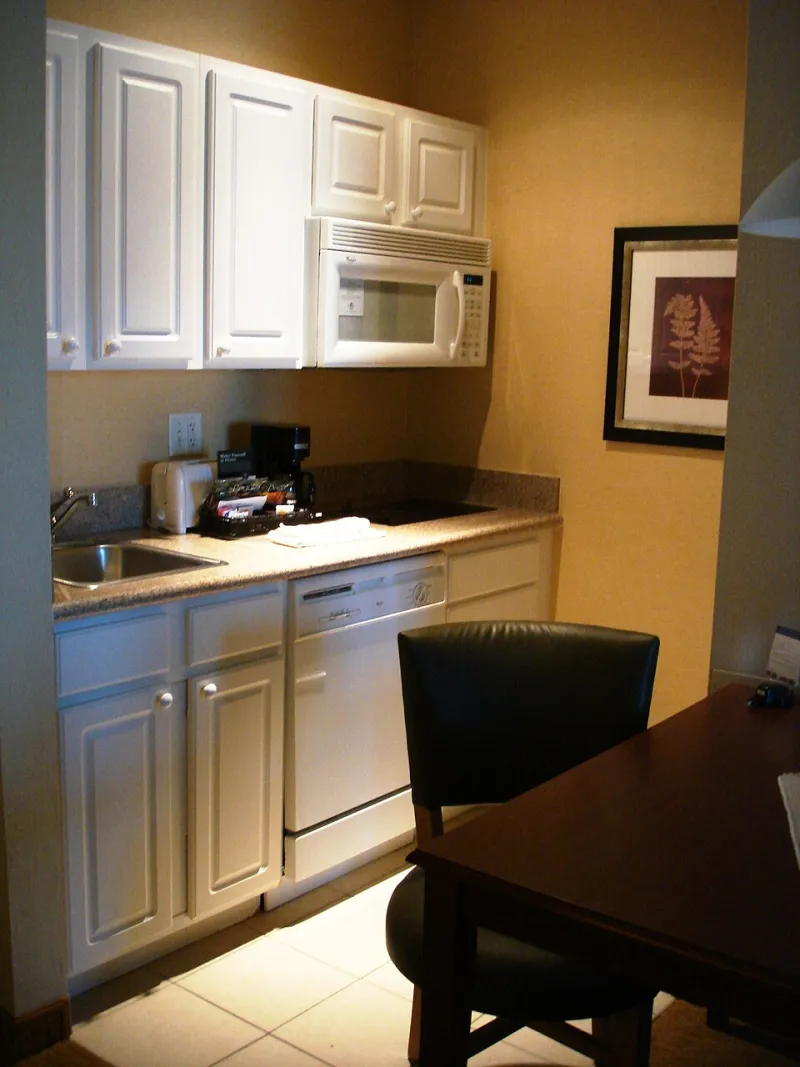
Photo: Stilfehler, CC BY-SA 3.0, via Wikimedia Commons
On Tuesday night I scraped a patch of dried acrylic off the kitchen table with my thumbnail while the pasta water came up to the boil. Ninety seconds, maybe. Then the lid went back on the paint pot, the brushes got stacked on a bit of kitchen roll, and the whole lot moved to the windowsill so we could eat.
That's the studio. That has been the studio for four years now.
I used to think it was a temporary arrangement. A staging post. That at some point there would be a room with a north-facing window and a proper plan chest and a chair I didn't also use as a step. Spoiler: there isn't, there won't be, and I've finally stopped waiting for one.
The box room that never was
We live in a Victorian terrace, which is a polite way of saying there are two bedrooms upstairs and one of them is doing a lot of heavy lifting. In my head it's a studio. In reality it contains an ironing board, a broken lamp I keep meaning to fix, a Christmas tree in a bin bag, and two boxes labelled rather optimistically 'misc'.
Every January I announce I'm clearing it out. Every February I have moved the 'misc' boxes four inches to the left and called it progress. The damp patch on the back wall has been there longer than my creative practice has.
There was a period — I'm not proud of it — where I measured the box room for a desk, ordered a desk lamp from Argos, and spent a genuinely enjoyable evening looking at pegboards online. The lamp arrived. It lives in a cupboard. The pegboard never happened. What did happen is that I made less work that month than at any point in the year, because I was too busy designing a room I didn't have to make things in.
That's the trap, isn't it. Preparing to be creative becomes a very satisfying hobby in its own right.
What a kitchen table gives you for nothing
Here's the unglamorous case for working in the middle of everything.
The light is decent. There's a kettle within arm's reach. There's a bin, a tap, and a roll of kitchen roll that will solve most small disasters. You are three steps from the radio and four from the biscuit tin.
More importantly, you can't hide. When the paint is out on the table at seven in the evening, everyone in the house can see that the work is happening. It becomes part of the furniture of family life rather than an exotic thing you disappear to do. My other half stopped asking 'what are you doing tonight' somewhere around year two, which is its own kind of support.
And there's the deadline built into the furniture. Dinner is coming, whether or not I've finished the second coat. That pressure is bracing, actually. It stops you fiddling.
The biscuit tin method
If you take one thing from this, take the tin. Mine is a square one that once held Fox's biscuits — the sort with the slightly dented lid that you keep because it's a good tin. Inside lives my whole working kit: three brushes, a graphite pencil, a rubber, a craft knife, a small pot of gesso, a rag, and a set of cheap watercolours that I bought on a whim in The Range and have used more than anything else I own.
Everything that doesn't fit in the tin goes in a Really Useful Box that slides under the bed. My A2 cutting mat lives behind the sofa, which sounds ridiculous until you try it — it's light, it's flat, and nobody has ever noticed it in four years. The sewing machine lives in the airing cupboard, which is dry, warm and exactly the right size, and I'd recommend it to anyone with a spare shelf and no spare room.
The rule is simple: if a project needs more than the tin and the box, it doesn't get to live out. It gets started, worked on, and packed away. That sounds restrictive. In practice it's the thing that makes weekly making possible, because there's never a mountain of stuff to clear before I can begin.
Rules I've made, and the ones I've broken
No wet work after six, because a table that's still tacky at dinner is a household grievance waiting to happen. The laundry basket is not storage and never will be, however tempting the shape. Ask before borrowing the good scissors, and accept that the answer will be no.
What I've broken: I still leave pencils on the windowsill for weeks, I have definitely cooked a Sunday roast with a still-life arrangement pushed to one end of the table, and in September I let a craft knife sit out overnight. That one I regret, and I've since bought a small lidded tray with a clasp, which cost about six quid and solved the problem entirely.
Practical tip that took me years: put a plain cotton tea towel under whatever you're doing. It stops the table getting scratched, it soaks up the small spills, and it goes in the wash in one motion when you're done. Buy four. They retire at a rate of roughly one a year.
The two-minute reset
Before food goes on the table, everything goes in the tin. Not tidied — just moved. Tidying is a separate job for a separate day. This is a two-minute evacuation, and doing it every single evening means the table never becomes the place where projects go to die.
Because that's the real risk, isn't it. Not that the work will be bad. That it will be inconvenient enough that you stop.
The bit that actually matters
Nobody has ever looked at a finished piece of work and asked what room it was made in. They ask how long it took, or how you got that colour, or whether you'd make them one. The table doesn't come into it.
A spare room would be lovely. I'd take one tomorrow. But I've spent enough evenings fantasising about pegboards while the actual brushes sat dry in a jar, and I'd rather have a slightly cramped, faintly paint-speckled kitchen and a stack of finished things than a beautifully planned studio I never quite get round to using.
The work matters more than the room. It turns out that's not a consolation prize. It's just true.