The Toaster That Refused to Be Fixed — and Why I'm Glad It Did
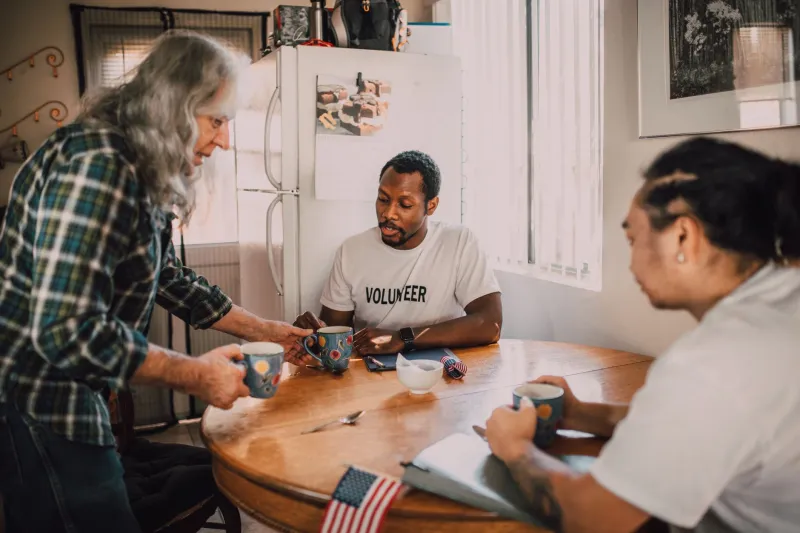
I am not a person you would call handy. I own a glue gun, yes, but we have a complicated relationship. So when I decided to host a 'bring your own broken thing' evening at my kitchen table, it was less a display of confidence and more an act of faith. Faith that neighbours would turn up. Faith that tea and biscuits could carry the conversation when the screwdrivers failed. Faith that a toaster might teach me something.
The guest list: a toaster, a cushion and a wobbly chair
Seven people came. Between them they brought: one toaster with a lever that refused to stay down, one cushion with a split seam, one wobbly chair (leg number three, always leg number three), and a carrier bag of mystery cables that looked like they had been living in someone's loft since the early 2000s. Someone also brought a small lamp that flickered. And someone else brought a broken heart — not literally, but a story about a relationship ending, which we listened to while the kettle boiled.
The idea came from the Repair Café movement, which has been quietly growing across the UK for years. I love the principle — volunteers with skills, items saved from landfill, community over consumerism — but the formal ones can feel a bit intimidating if you are the sort of person who once superglued their fingers together. I wanted something softer. A kitchen table. A plate of custard creams. No sign-in sheet.
Small wins and a stubborn toaster
We started with the chair. A dowel, some wood glue, and a clamp borrowed from a neighbour who used to be a carpenter. Twenty minutes later, it was steady. The cushion took ten minutes and a needle and thread; the seam was closed, slightly crooked but strong. The mystery cables were identified: one was a charger for a device no longer owned, one was a camera cable, and one was — we think — for a hedge trimmer. The flickering lamp turned out to have a loose bulb. Easy.
Then there was the toaster.
It was a four-slice model, about six years old, and the lever wouldn't latch. We took out the crumb tray (horrifying), unscrewed the base (eight screws, two of which were hidden under rubber feet), and peered inside. There was a spring mechanism that had lost its tension, a plastic catch that had worn down, and a lot of crumbs. We tried bending the spring. We tried wedging a bit of cardboard in (I know). We tried swearing. Nothing worked.
The problem, we discovered, was that the toaster was not designed to be repaired. The casing was clipped together in a way that required a special tool. The spring was riveted in place. The replacement part — if we could identify it — would cost almost as much as a new toaster. And this is the point where the right-to-repair conversation stops being abstract. Since 2021, UK regulations have required some appliances to be repairable, but small kitchen gadgets like toasters often slip through the net. They are built to be replaced, not mended.
The lesson in the failure
We spent an hour on that toaster. It never worked again. But something else did.
While we fiddled with the spring, the conversation wandered from the cost of living to the price of bread to a shared memory of a grandparents' kitchen. Someone admitted they had never used a screwdriver before. Someone else admitted they had a cupboard full of broken things they felt guilty about. We ate biscuits. We drank tea. We laughed at the absurdity of trying to fix a toaster that had been designed to defeat us.
I learned that community doesn't always look like success. Sometimes it looks like six people standing around a kitchen table, staring at a broken spring, and deciding to stay anyway. The chair got fixed. The cushion got fixed. The toaster did not. And yet I would call the evening a success, because the point was never the toaster.
Why shared mending matters
There is something quietly radical about sitting with a broken thing and not immediately throwing it away. Not because you are a martyr to landfill, but because the act of trying — together — shifts something. You stop being a consumer and become a participant. You learn the names of your neighbours. You learn that the person two doors down can sew a seam like a professional. You learn that the person across the road has a toolbox and a lot of patience.
I am not suggesting we all become repair experts. I am suggesting that the next time something breaks, you might ask around before you bin it. You might host a table. You might invite someone to bring their broken thing. The toaster might never work again, but the evening will.
What happens next
I am planning another one. Same table, same biscuits, maybe a slightly better set of screwdrivers. I have a broken kettle and a lamp that needs rewiring. And I have a neighbour who has promised to bring her sewing machine. We will not fix everything. But we will try.
If you are in the UK and want to find a Repair Café near you, there are hundreds listed online. If you want to start your own, you do not need a workshop or a qualification. You need a table, a kettle, and a willingness to let the toaster win sometimes.