My Knitting Has No Business Plan — and That's Exactly How I Like It
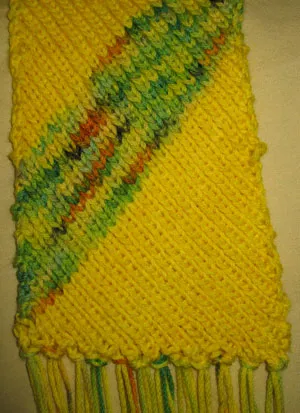
Photo: Bekathwia, CC BY-SA 2.0, via Wikimedia Commons
Last Tuesday, I dropped a stitch in front of six people at the village hall. Nobody gasped. Nobody asked if I'd considered turning my 'journey' into a YouTube tutorial. We just passed the wool round and carried on.
But earlier that day, someone had asked the question. You know the one. 'Have you thought about selling those?' I was holding a half-finished scarf at the time — a scarf with a hole in it and a colour palette best described as 'accidental'. I said no. They looked at me like I'd turned down a promotion.
The side-hustle question
Somewhere between the rise of the kitchen-table business and the endless scroll of Instagram tutorials, we've decided that every hour not spent earning is an hour wasted. A hobby is no longer a hobby; it's a 'pre-revenue passion project'. Knitting becomes a potential Etsy shop. Baking becomes a cottage food operation. Even reading — reading! — gets reframed as 'research for my Substack'.
In the UK, we've got a particular flavour of this. It's the 'what else do you do?' question at a barbecue, the well-meaning aunt who suggests you 'get on Not On The High Street', the friend who sends you a link to a Small Business Saturday webinar because they 'just thought you'd be interested'.
And look, I get it. Money is tight. Creative work is undervalued. There's a real joy in making something people want to buy. But there's a difference between choosing to sell and feeling like you're somehow letting the side down if you don't.
What happens when a hobby gets a spreadsheet
I know because I tried. A few years ago I set up an Instagram account for my knitting. I bought a domain name. I made a logo involving a ball of wool and a lot of optimism. I lasted eleven days. The moment I started photographing a scarf for the grid, the scarf stopped being a scarf and became 'content'. The moment I checked my views, I stopped enjoying the click of the needles.
And then there's the admin. The moment you sell one hat for £15, you're not just a knitter — you're a sole trader with a £1,000 trading allowance to keep an eye on. That's not a reason to avoid selling if you want to. But it is a reason to ask yourself whether you actually want to.
The myth of the 'wasted' skill
Here's the thing I keep coming back to: not everything has to be productive. We don't ask people why they watch telly, or why they go for a walk without tracking their steps. But creative hobbies get this extra layer of scrutiny. If you're good at something, why aren't you monetising it? If you're bad at something, why are you bothering?
I am, objectively, a mediocre knitter. My tension is inconsistent. My jumpers have a tendency to fit like sacks. But the process — the counting, the quiet, the feel of wool — is the point. The scarf is just a by-product. It doesn't need to pay for itself. It's already paid me back in Tuesday evenings.
A small act of defiance
Keeping one thing unmonetised is a small act of defiance in a culture that wants your hobbies to have a bio link. It's saying: this is mine. It doesn't have to be good. It doesn't have to be shared. It doesn't have to be a 'journey'.
That doesn't mean I'm anti-business. I buy from small makers. I love a craft fair. I've got a favourite ceramicist on Instagram and I've bought her mugs for three consecutive birthdays. But I also think there's room for a hobby that never appears on a grid, that never gets a price tag, that exists purely because it makes a Tuesday night go faster.
So no, I won't be opening an Etsy shop. I'll be here, dropping stitches, drinking tea, and making a scarf that nobody asked for. And if that's a waste of time, then I'm happy to waste it.